508.563.6633

WASTEWATER CONSIDERATIONS
Wastewater is a huge issue in the Cape and Islands region. The nutrient loading to the coastal ecosystems is growing and causing issues in salt estuaries and kettle ponds as the climate warms. Excess nitrogen and phosphorus are real issues and need to be addressed in ways that are affordable, flexible and expedient to make the most impact. For the most recent Title 5 guidance related to ADUs, offered by the DEP (Department of Environmental Protection):https://www.mass.gov/doc/frequently-asked-questions-faq-related-to-guidance-on-title-5-310-cmr-15000-compliance-for-accessory-dwelling-units/download
It is essential to understand how many bedrooms your home’s septic system is designed for if you wish to add the ADU to your existing septic system. First step for most interested homeowners is to contact your health department at town hall to inquire about the location of your property (are you in a Zone II, IWPA, or any other sensitive designated area requiring septic upgrades). Also inquire if they have your septic system on file and can tell you the age of your system/year of install, design capacity (how many bedrooms) and what your next steps are: will your system require installing an additional tank, upgrading your septic to a newer traditional septic system or installing an innovative-alternative system (I/A system) if you are in a nitrogen sensitive area? Accessory Dwelling Units trigger a second tank being installed at the very least, due to it being a second dwelling unit (versus simply an additional bedroom).
Hooking up to my Title 5
If your septic system is large enough to accommodate an additional bedroom of the ADU, then that is an easy addition. In some cases, people have surrendered/decommissioned a bedroom in the home by either removing the door and widening the casement area of the doorway, then turning it into an office or den in order to have the capacity to hook the ADU up to the septic system. Each town has a different definition of bedrooms, so contact your building or planning department to learn how your town defines a bedroom. Overall septic questions, you should discuss this with your engineer or someone in your local health office can assist you with your options.
What if I have a cesspool?
If your home’s wastewater system is a cesspool, you will not be able to connect an ADU to the system. Some towns are mandating updating of cesspools, which can be costly. This is an excellent scenario where a compositing, incinerating or urine diversion toilet system would be best to handle the “black water” from the system. It may require a variance and possible deed restriction, but could be the more financially wise decision. In the meantime, be sure your cesspool is being pumped regularly!
Composting, urine diversion or incinerating toilet options
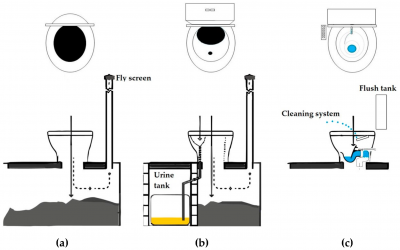
For many ADUs it is quite practical to install a composting or incinerating toilet
Composting Toilets enable all of the waste to be captured and composted.
Urine Diverting Composting Toilets enable the nutrient-rich urine to be separated from the feces, which get composted.
Incinerating Toilets enable all of the waste to be captured and burned within the unit.
It should be noted that all of the grey water from showers, dishwashing, laundry, etc. is handled by a septic system or sewer, if your site is hooked up.
Installing composting or incinerating toilets costs a fraction of what it costs to install an I/A system or waiting to get connected to a planned sewer.
Urine diversion systems enable us to capture and reuse the valuable nitrogen and phosphorus for fertilizer.
Many thanks to Talitha Abramsen and The Green Center (great resource for urine diversion information)
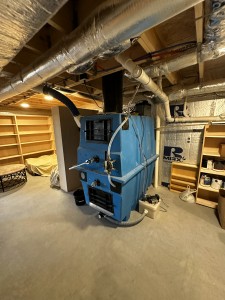
Phoenix composting toilet capture tank
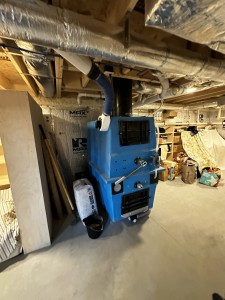
Another view of the Phoenix composting toilet capture tank
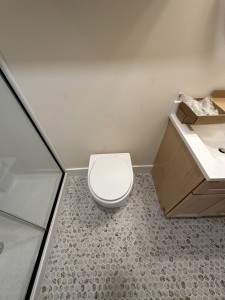
Phoenix composting toilet in bathroom